
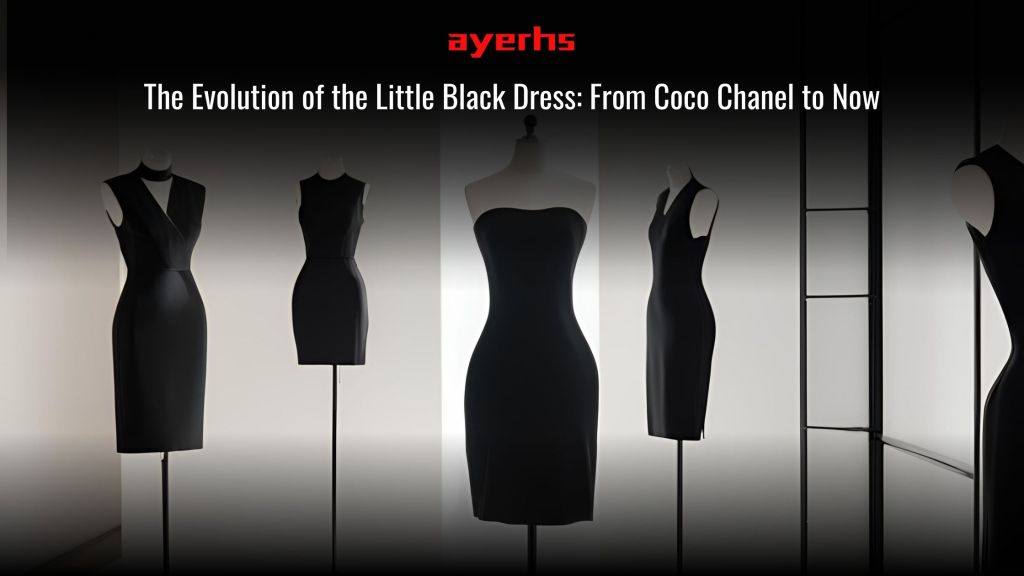
The “little black dress” (LBD) is one of the most enduring icons of fashion, a staple synonymous with elegance, versatility, and modernity. From its inception in the early 20th century by Coco Chanel to its continuous reinvention by contemporary designers, the LBD has remained a wardrobe essential, reflecting social, cultural, and artistic shifts over the decades. This blog explores the history and evolution of the little black dress, tracing its roots and its journey into becoming a timeless sartorial classic.
Coco Chanel: The Creator of Modern Simplicity
In 1926, Gabrielle “Coco” Chanel introduced the world to the little black dress with a design published in Vogue. The dress was a simple sheath of black crêpe de Chine, with long sleeves and a modest hemline that fell just below the knee. Vogue compared it to the Ford Model T, calling it a “uniform for all women of taste.”
Before Chanel’s innovation, black was primarily associated with mourning or modesty. The idea of wearing black for anything other than somber occasions was almost unheard of. Chanel revolutionized this perception by creating a dress that exuded elegance while maintaining practicality. Her design was minimalist, freeing women from the restrictive corsetry and heavily embellished garments of the Edwardian era.
The original LBD epitomized Chanel’s philosophy: elegance should be simple. It became an instant hit, offering an accessible yet chic option for women of varying social standings.
The 1930s and 1940s: Glamour in the Shadows
As the Great Depression took hold in the 1930s, the LBD remained a wardrobe constant, largely due to its affordability and versatility. Hollywood played a pivotal role in popularizing the dress further. Actresses like Greta Garbo and Joan Crawford were often seen in sleek black gowns, which captured the imagination of the public.
During World War II, fabric rationing led to simpler, more practical clothing. The little black dress, with its economy of material and timeless design, became a practical choice for women navigating the constraints of wartime. Yet it managed to retain an air of sophistication, embodying the idea that elegance need not be sacrificed in hard times.
The 1950s: Christian Dior and the New Look
After the austerity of the war years, the 1950s ushered in an era of luxury and femininity. Christian Dior’s “New Look” was the antithesis of wartime simplicity, characterized by cinched waists, full skirts, and an emphasis on the hourglass silhouette. The LBD evolved during this time, taking on a more glamorous persona.
Audrey Hepburn’s iconic Givenchy dress in Breakfast at Tiffany’s (1961) is often credited with cementing the LBD’s status as a cultural phenomenon, but its roots can be traced to the 1950s. Hepburn’s partnership with Hubert de Givenchy marked a turning point where the little black dress transitioned from simple elegance to ultimate sophistication.
The 1960s: Mod, Minimalism, and Youth Culture
The 1960s saw the rise of youth culture, modernism, and experimentation. Designers like Mary Quant revolutionized fashion with the introduction of the miniskirt, and these trends influenced the evolution of the LBD.
The LBDs of the 1960s often had shorter hemlines, A-line shapes, and playful details, reflecting the era’s youthful exuberance. Designers like André Courrèges and Yves Saint Laurent added geometric patterns and futuristic elements to their versions of the dress.
One notable LBD from the era was Yves Saint Laurent’s “Le Smoking” tuxedo dress, which reimagined the little black dress as an androgynous statement piece. This design highlighted the shift towards more gender-fluid fashion while maintaining the LBD’s core identity.
The 1970s and 1980s: Power Dressing and Rebellion
The 1970s brought a mix of bohemian chic and disco glam, and the little black dress adapted to both. Halston, for instance, created fluid jersey dresses that embodied the era’s carefree spirit, making the LBD a staple on the dance floors of Studio 54.
The 1980s saw the rise of power dressing, fueled by the burgeoning feminist movement and women entering the workforce in greater numbers. Designers like Donna Karan and Azzedine Alaïa created structured, body-conscious versions of the LBD that exuded confidence and authority. The exaggerated shoulders and bold silhouettes of the decade also found their way into the LBD’s evolution, aligning with the ethos of ambition and empowerment.
Simultaneously, the punk and goth subcultures adopted the LBD as a symbol of rebellion. Vivienne Westwood’s deconstructed designs and the goth community’s penchant for dark, romantic aesthetics offered alternative interpretations of the classic dress.
The 1990s: Minimalism Meets Supermodel Glamour
The 1990s marked a return to simplicity, a response to the excess of the previous decade. Calvin Klein’s slip dresses epitomized this minimalist era, with sleek, spaghetti-strap LBDs made from silk or satin becoming a go-to choice for both red carpets and everyday wear.
At the same time, the supermodel era brought a sense of glamour back to the LBD. Designers like Gianni Versace introduced daring cuts, metallic embellishments, and figure-hugging silhouettes, making the dress a favorite among fashion icons like Naomi Campbell and Cindy Crawford.
One of the most iconic LBD moments of the decade was Princess Diana’s “revenge dress,” designed by Christina Stambolian. The off-the-shoulder, body-skimming dress symbolized confidence and defiance, showing how the LBD could convey powerful personal statements.
The 2000s: Redefining Versatility
The new millennium saw the little black dress expand its versatility even further. Designers experimented with fabrics, cuts, and embellishments to make the LBD a canvas for endless creativity.
Alexander McQueen and John Galliano pushed the boundaries with theatrical interpretations of the LBD, incorporating elements like corsetry, lace, and asymmetry. Meanwhile, fast fashion brands made affordable versions of the LBD accessible to the masses, solidifying its place as a wardrobe essential for all.
Celebrities like Sarah Jessica Parker in Sex and the City showcased the LBD’s adaptability, pairing it with bold accessories or statement shoes to create standout looks. The dress became a chameleon, suitable for casual brunches, office meetings, or glamorous galas.
The 2010s: Sustainability and Individuality
The 2010s brought a focus on sustainability and personal expression. Many designers embraced eco-friendly practices, creating LBDs from recycled materials or organic fabrics. The emphasis on individuality also meant that the LBD became a vehicle for self-expression, with custom tailoring, unique cuts, and statement details.
Social media further elevated the LBD’s status, as influencers and celebrities showcased diverse ways to style it. The rise of gender-neutral fashion also expanded the LBD’s appeal beyond traditional boundaries, with unisex designs and styling options gaining popularity.
The 2020s: The LBD in a Changing World
In the 2020s, the little black dress continues to evolve, reflecting societal changes and technological advancements. The COVID-19 pandemic shifted the focus toward comfort and practicality, with many designers creating LBDs that balance elegance with wearability.
Sustainability remains a key theme, with brands like Stella McCartney and Gabriela Hearst leading the way in eco-conscious fashion. The integration of technology into fashion has also led to innovations in fabric and design, including dresses with LED elements or 3D-printed details.
Celebrities like Zendaya and Rihanna have embraced bold, avant-garde interpretations of the LBD, ensuring its relevance on red carpets and in pop culture. At the same time, vintage and second-hand markets have surged in popularity, with classic LBDs from earlier decades finding new life in contemporary wardrobes.
Why the Little Black Dress Endures
The enduring appeal of the little black dress lies in its versatility, adaptability, and cultural significance. It transcends trends, serving as a blank canvas for personal expression while maintaining its intrinsic elegance. Whether it’s Coco Chanel’s original design, Audrey Hepburn’s timeless Givenchy look, or a modern sustainable iteration, the LBD is a symbol of fashion’s ability to evolve while staying true to its roots.
In a world of constant change, the little black dress remains a constant—a reminder that simplicity, when paired with creativity, can create something truly timeless.
The little black dress is more than just a piece of clothing; it’s a cultural icon that has shaped and been shaped by the world around it. From Chanel’s revolutionary vision to its current status as a staple in every wardrobe, the LBD’s journey is a testament to the power of fashion to adapt, innovate, and inspire.
As we look to the future, one thing is certain: the little black dress will continue to evolve, reflecting the spirit of its time while remaining a timeless classic.
 Ayerhs Magazine