
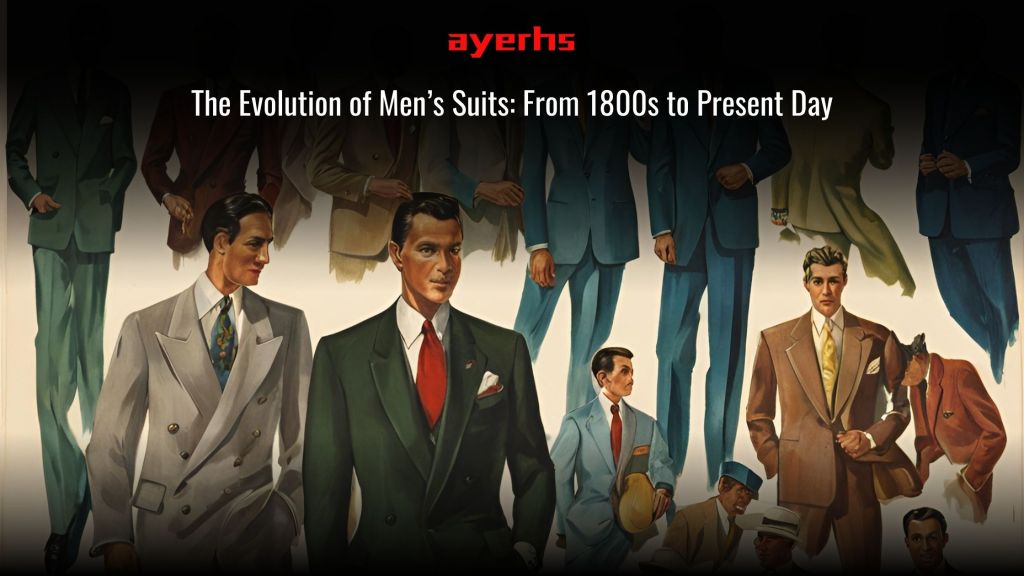
Men’s suits have long been a cornerstone of fashion, reflecting societal changes, technological advancements, and shifting cultural norms. From the formal, structured styles of the 19th century to the diverse, personalized tailoring of the present day, the evolution of men’s suits offers a fascinating lens into the history of masculinity, class, and identity. This blog traces the suit’s journey from its roots in the 1800s to its modern adaptations.
The Early 1800s: The Birth of the Modern Suit
The modern suit as we know it began to take shape in the early 19th century, influenced heavily by British dandyism. Beau Brummell, a key figure of the Regency era, revolutionized men’s fashion with his preference for understated elegance. Rejecting the ornate styles of the 18th century, Brummell popularized tailored coats, plain waistcoats, and fitted trousers in dark, muted colors, paired with crisp white shirts and perfectly tied cravats.
This period marked a shift toward more practical and uniform clothing, reflecting the values of the emerging middle class. The suit became a symbol of respectability, professionalism, and decorum, setting the tone for its future iterations.
Mid to Late 1800s: The Victorian Era
During the Victorian era, suits became more structured and formal, mirroring the rigid societal norms of the time. The frock coat, characterized by its knee-length design and waist seam, was a staple of the 19th century. It was typically worn with waistcoats and trousers made from matching fabrics, creating a cohesive and polished look.
As industrialization gained momentum, ready-to-wear suits began to emerge, making them more accessible to the growing middle class. However, bespoke tailoring remained a hallmark of the upper class. The morning coat, with its cutaway front, became popular for daytime formal wear, while the tailcoat was reserved for evening occasions.
Early 1900s: The Edwardian Era
The Edwardian era brought a more relaxed approach to men’s fashion, though formality still prevailed. Sack suits, featuring a loose-fitting jacket without a defined waistline, gained popularity among men of various social standings. These suits were less restrictive than their Victorian predecessors, reflecting the era’s slight shift toward comfort.
The three-piece suit became a standard during this period, with matching trousers, jackets, and waistcoats. The silhouette remained relatively boxy, with high lapels and a conservative color palette dominating the style.
1920s: The Jazz Age and the Roaring Twenties
The 1920s marked a dramatic shift in men’s suit styles, influenced by the exuberance and economic prosperity of the Roaring Twenties. Slimmer cuts, shorter jackets, and wider lapels defined the decade’s suits. The double-breasted suit gained popularity, exuding a sense of boldness and confidence.
Pinstripes, checks, and lighter colors began to emerge as men embraced a more playful approach to fashion. Accessories like pocket squares, tie pins, and fedoras completed the dapper look. This era also saw the rise of American influence on men’s fashion, as Hollywood icons like Clark Gable and Fred Astaire became style icons.
1930s: The Golden Age of Tailoring
The 1930s are often regarded as the golden age of men’s tailoring. Despite the economic challenges of the Great Depression, men’s suits became more sophisticated and refined. Broad shoulders, nipped waists, and tapered trousers created a masculine silhouette that emphasized strength and stability.
The drape suit, pioneered by London tailors, gained popularity for its elegant, relaxed fit. This style was characterized by its soft shoulders and fuller chest, providing a sense of movement and ease. Darker colors and pinstripes remained staples, reflecting the conservative mood of the time.
1940s: Wartime Restrictions and Utility Suits
World War II brought significant changes to men’s fashion. Fabric rationing led to the development of utility suits, which were simple, single-breasted, and devoid of unnecessary embellishments. Lapels were narrower, and trousers lacked cuffs to save material. Despite these limitations, men continued to wear suits as a symbol of resilience and professionalism.
After the war, the austerity of wartime gave way to a renewed interest in style. The late 1940s saw the emergence of more relaxed, American-inspired suits, with fuller cuts and looser fits, signaling a shift toward comfort and practicality.
1950s: The Post-War Boom and Ivy Style
The 1950s ushered in a period of economic prosperity and cultural conservatism, reflected in the era’s clean-cut, polished suits. The gray flannel suit became a symbol of corporate success, while slimmer lapels and shorter jackets introduced a modern, streamlined aesthetic.
At the same time, the Ivy League look gained traction among younger men. This preppy style featured natural shoulder jackets, button-down shirts, and flat-front trousers, blending casual elegance with traditional tailoring. The 1950s also saw the rise of Italian tailoring, with its emphasis on lightweight fabrics and unstructured designs.
1960s: Mod Culture and Revolutionary Style
The 1960s were a decade of cultural revolution, and men’s suits reflected the era’s dynamic energy. The Mod movement in Britain popularized slim-fitting suits with narrow lapels, influenced by the styles of The Beatles and other pop culture icons.
Bold colors, geometric patterns, and unconventional fabrics like velvet and corduroy challenged traditional notions of menswear. The Nehru jacket, inspired by Indian fashion, briefly became a symbol of countercultural sophistication. This era marked a departure from formality, as men began to experiment with their personal style.
1970s: The Era of Excess
The 1970s were defined by flamboyance and experimentation, with men’s suits embracing boldness and individuality. Wide lapels, flared trousers, and oversized collars dominated the decade’s fashion. Three-piece suits with matching waistcoats were a popular choice, often paired with bright shirts and patterned ties.
The disco culture of the era introduced shiny fabrics like polyester, while pastel colors and bold patterns reflected the exuberance of the time. This period also saw the rise of designer menswear, as brands like Yves Saint Laurent and Giorgio Armani gained prominence.
1980s: Power Dressing
The 1980s were the decade of power dressing, epitomized by oversized suits with broad shoulders and sharp lines. The emphasis on strong, imposing silhouettes mirrored the aggressive capitalism and corporate culture of the era.
Pinstripes, double-breasted jackets, and bold colors became staples of the “yuppie” wardrobe, while designers like Armani redefined men’s suits with their relaxed yet luxurious styles. The 1980s also saw the emergence of casual suits, reflecting the growing influence of streetwear and athletic culture.
1990s: Minimalism and Casualization
The 1990s brought a stark contrast to the excesses of the 1980s, as minimalism and casualization took center stage. Men’s suits became simpler and more understated, with neutral colors, unstructured cuts, and lightweight fabrics defining the era’s aesthetic.
The rise of business casual dress codes led to a decline in the everyday use of suits, as men opted for more versatile and comfortable clothing. Designers like Jil Sander and Calvin Klein championed a minimalist approach, focusing on clean lines and subtle elegance.
2000s: The Slim Fit Revolution
The early 2000s saw a resurgence of interest in tailored suits, driven by the popularity of slim-fitting styles. Hedi Slimane, as creative director of Dior Homme, revolutionized menswear with his ultra-skinny silhouettes, inspiring a new generation of fashion-conscious men.
Single-breasted suits with narrow lapels, low-rise trousers, and shorter jackets became the norm, reflecting a modern, youthful aesthetic. This period also saw the rise of fast fashion, making stylish suits more accessible to a wider audience.
2010s: The Era of Personalization
The 2010s were characterized by a diverse and individualized approach to men’s suits. Advances in technology, such as online tailoring services and 3D body scanning, allowed men to customize their suits with unprecedented precision.
Vintage-inspired styles, such as three-piece suits and double-breasted jackets, experienced a resurgence, while bold colors, patterns, and unconventional fabrics gained popularity. The rise of streetwear and athleisure also influenced formalwear, with designers blending traditional tailoring with casual elements.
2020s: Sustainability and Versatility
In the 2020s, men’s suits continue to evolve, driven by a focus on sustainability and versatility. Eco-friendly materials, ethical production methods, and timeless designs are becoming priorities for both designers and consumers.
The pandemic-induced shift toward remote work has further transformed men’s fashion, with many opting for relaxed, unstructured suits that balance comfort and style. Contemporary suits often feature softer tailoring, elasticized waistbands, and wrinkle-resistant fabrics, reflecting the demands of modern lifestyles.
At the same time, the suit remains a symbol of elegance and professionalism, with brands like Tom Ford, Zegna, and Proenza Schouler offering innovative takes on classic designs. Men now have the freedom to express their individuality through their choice of suits, blending tradition with innovation.
Conclusion: A Reflection of Society
The evolution of men’s suits from the 1800s to the present day mirrors broader societal changes, from the rigid formality of the Victorian era to the fluid, personalized styles of the 21st century. As men’s fashion continues to evolve, the suit remains a versatile and enduring symbol of style, adapting to the needs and preferences of each generation while maintaining its timeless appeal.
 Ayerhs Magazine