
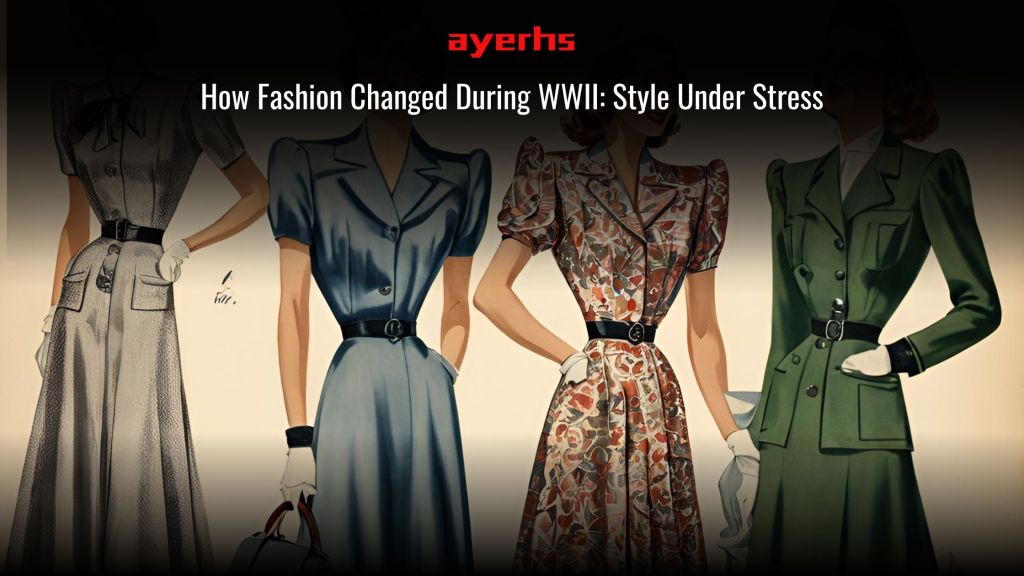
The Second World War (1939–1945) was not just a period of intense geopolitical conflict; it also reshaped nearly every facet of daily life, including fashion. During this global upheaval, clothing trends shifted drastically to adapt to new societal roles, material shortages, and government regulations. Fashion became a canvas for creativity and resilience, as individuals and industries navigated the constraints of wartime life while striving to maintain personal expression. This blog delves into how World War II influenced fashion trends, the birth of utilitarian design, and the lasting legacy of wartime styles.
The Fashion Landscape Before WWII
Before the war, the late 1930s represented an era of glamour, elegance, and indulgence in fashion. Women’s clothing was dominated by Parisian haute couture, featuring flowing gowns, intricate embroidery, and cinched waists. Corsetry and voluminous skirts defined the silhouette, emphasizing femininity and luxury. Accessories such as gloves, hats, and jewelry completed these opulent ensembles.
Men’s fashion, on the other hand, revolved around tailored suits, which varied for different occasions. Double-breasted jackets, wide lapels, and pocket squares were hallmarks of men’s formal wear, often made with premium fabrics like wool.
However, as the political climate in Europe grew tense and nations began to prepare for war, priorities shifted. The extravagance of pre-war fashion soon gave way to practicality and austerity.
The Rise of Utility Fashion: Adapting to Wartime Realities
With the outbreak of WWII, fashion faced significant constraints due to the redirection of resources toward the war effort. Governments across Europe and the United States introduced measures to conserve materials, impacting how clothes were designed, manufactured, and consumed.
Fabric Rationing and the Utility Scheme
Materials like wool, silk, and leather were prioritized for military use. For instance, silk and nylon, previously used for luxury garments and stockings, were redirected to produce parachutes and other military supplies. Governments introduced clothing rationing systems to control fabric consumption. In Britain, the Utility Scheme was launched in 1941, regulating the production of civilian clothing to conserve textiles. This initiative imposed strict guidelines on garment design, including limits on the number of pleats, buttons, and pockets.
In the United States, the War Production Board issued Limitation Order L-85 in 1942, restricting the use of fabric in civilian clothing. Details like cuffs, extra-wide hems, and intricate decorations were eliminated to save material.
Despite these restrictions, utility clothing was not entirely devoid of style. Designers like Hardy Amies and Norman Hartnell worked within the framework to create garments that were both functional and fashionable. Simple yet elegant, these pieces became the foundation of wartime style.
Impact on Women’s Fashion
Wartime conditions brought significant changes to women’s fashion, reflecting their evolving roles in society.
- Practicality Over Ornamentation
As women joined the workforce in droves, clothing had to accommodate the demands of industrial and physical labor. Practical garments like trousers, overalls, and shirtwaist dresses became common. These pieces emphasized simplicity and ease of movement over intricate design. - Shorter Skirts and Functional Silhouettes
Fabric rationing led to shorter hemlines and pared-down silhouettes. Skirts became straighter and more streamlined, often falling just below the knee. Puffed sleeves, previously a symbol of femininity, were replaced with flatter, more utilitarian designs. - Trousers for Women
Traditionally a male garment, trousers became a wardrobe staple for women during the war. Initially adopted for practicality in factories and farms, trousers soon gained mainstream acceptance as women embraced their newfound independence.
The Make Do and Mend Ethos
In response to clothing shortages, governments encouraged citizens to “Make Do and Mend.” This campaign emphasized repairing and repurposing old garments instead of buying new ones. Sewing and knitting became vital skills, and people transformed curtains, tablecloths, and worn-out clothing into functional outfits. This movement fostered a spirit of resourcefulness and creativity, with patchwork designs and hand-sewn details reflecting individual flair.
The Impact on Men’s Fashion
While women’s fashion saw significant transformation, men’s clothing also adapted to wartime realities.
- Military Influence on Civilian Wear
Military uniforms influenced everyday men’s fashion, leading to trends like padded shoulders, structured coats, and straight-legged trousers. Trench coats, bomber jackets, and cargo pants transitioned from battlefield necessities to civilian staples. - Simplification and Utility Suits
Fabric rationing affected men’s suits as well. Tailoring became more conservative, with narrower lapels, fewer pockets, and shorter jackets. The British Utility Suit was introduced as a practical and affordable option, featuring standardized designs to conserve resources. - Casualization of Men’s Attire
The war also brought a shift toward more casual dressing. Bomber jackets, reefer coats, and knit sweaters became acceptable alternatives to traditional formalwear, reflecting the practicality of wartime life.
Accessories and Beauty: Creativity Amid Constraints
Accessories and beauty trends adapted to the limitations imposed by the war, often serving as outlets for personal expression.
- Hats and Scarves
Hats remained a popular accessory since they required minimal fabric and could elevate simple outfits. Scarves became multifunctional, doubling as head coverings for women working in factories and as stylish additions to everyday wear. - Stocking Substitutes
With nylon and silk reserved for military use, women sought creative alternatives to traditional stockings. Some painted their legs with makeup to mimic the look of stockings, even drawing “seams” up the back of their legs for authenticity. - Bakelite Jewelry
Metal shortages led to a rise in bakelite and plastic jewelry. Bold, colorful, and lightweight, these pieces added a touch of personality to otherwise austere outfits. - Makeup as Morale
Despite the hardships, makeup became a symbol of resilience. Red lipstick, in particular, was seen as patriotic, symbolizing courage and optimism. Brands like Elizabeth Arden even produced shades like “Victory Red” to align with the wartime spirit.
Hollywood and Propaganda: Influencing Wartime Style
The film industry and government propaganda played crucial roles in shaping wartime fashion.
- Hollywood Glamour
During the war, Hollywood provided much-needed escapism and inspiration. Actresses like Katharine Hepburn and Ingrid Bergman popularized practical yet stylish looks, including wide-legged trousers and tailored blouses. Their on-screen wardrobes influenced everyday women, blending functionality with elegance. - Fashion as Patriotism
Governments used fashion to promote unity and morale. Propaganda posters depicted women in tailored suits or workwear, emphasizing their contribution to the war effort. Magazines like Vogue adapted their content, featuring tips on dressing stylishly within the constraints of rationing.
Post-War Fashion: The Return of Elegance
The end of WWII in 1945 brought relief and celebration, which was reflected in fashion. As rationing ended and materials became more accessible, designers embraced a return to luxury and opulence.
- The New Look
In 1947, Christian Dior introduced his iconic “New Look,” characterized by full skirts, cinched waists, and soft, feminine lines. This dramatic shift from wartime austerity symbolized a renewed focus on beauty and indulgence, marking a new chapter in women’s fashion. - Revival of Formality
Post-war men’s fashion also returned to formality. Tailored suits with detailed craftsmanship became the norm again, reflecting a desire to reclaim pre-war sophistication. - Military Aesthetics Persist
Despite the resurgence of elegance, wartime styles left a lasting imprint. Trench coats, bomber jackets, and cargo pants remained staples in both men’s and women’s wardrobes, blending practicality with enduring appeal.
Societal Shifts Reflected in Fashion
The fashion changes during WWII were not merely about clothing; they mirrored deeper societal transformations.
- Empowerment of Women
The war redefined gender roles as women took on jobs traditionally held by men. This newfound independence was reflected in their clothing, which prioritized practicality and broke traditional notions of femininity. The normalization of trousers for women, for instance, marked a significant cultural shift. - Casualization of Men’s Attire
For men, the war accelerated the decline of rigid formality in everyday wear. The integration of casual, military-inspired styles into civilian wardrobes highlighted a more relaxed approach to dressing.
The Legacy of Wartime Fashion
The innovations and trends born out of necessity during WWII continue to influence fashion today. Synthetic fabrics like nylon and rayon, developed during the war, remain integral to modern clothing. Utility-inspired designs, from cargo pants to structured coats, have become timeless staples.
Above all, the resourcefulness and creativity of wartime fashion remind us that even in times of crisis, style can adapt and thrive. WWII fashion is a testament to resilience, reflecting the strength and ingenuity of individuals who turned limitations into opportunities for expression.
Conclusion
World War II reshaped the world in countless ways, and fashion was no exception. From the constraints of rationing and utility clothing to the innovations sparked by necessity, the era brought about significant changes in how people dressed and perceived style. Wartime fashion was not just a response to material shortages; it was a reflection of societal shifts, resourcefulness, and the human spirit’s capacity for adaptation.
The legacy of WWII fashion endures, influencing trends and reminding us that even under stress, creativity can flourish. Fashion during this period stands as a powerful example of how clothing can serve as both a practical necessity and a form of personal expression, even in the most challenging times.
 Ayerhs Magazine