
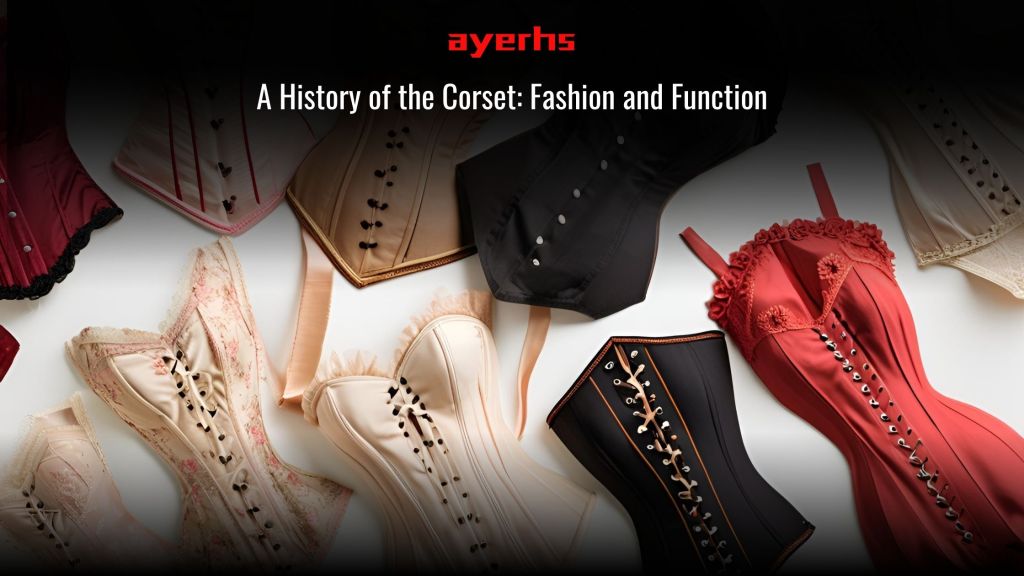
The corset, a garment steeped in history, controversy, and transformation, has played a pivotal role in the evolution of fashion. From its origins in ancient civilizations to its modern reinvention as a symbol of empowerment and aesthetic expression, the corset has transcended eras and societies, embodying the shifting ideals of beauty and function.
Origins: The Birth of the Corset
The corset’s lineage can be traced back to ancient times, with precursors seen in Minoan Crete around 2000 BCE. The Minoan Snake Goddess figurines depict women wearing tightly fitted bodices that emphasized the waist and bust, likely for religious or ceremonial purposes. These garments, though primitive compared to later corsets, highlight early human fascination with manipulating the silhouette.
In ancient Greece and Rome, women used bands or girdles called “strophia” to shape and support their torsos. Unlike the structured corsets of later centuries, these were simple sashes tied around the waist or bust. The function was less about constraining the body and more about providing support and modesty.
The Middle Ages: Modesty Over Shape
The Middle Ages saw a departure from form-fitting garments. Loose, flowing gowns dominated women’s fashion, and body-shaping undergarments were minimal. However, the seeds of the corset’s resurgence were sown in the 14th and 15th centuries, as European society began emphasizing the ideal of a narrow waist and a more structured silhouette.
The term “corset” emerged during this period, derived from the Old French word cors (body). Early corsets, often called “stays” or “pair of bodies,” were designed to flatten the chest and emphasize a long, lean torso. Constructed from stiff materials like linen or wool and reinforced with wooden busks or bone, these garments laid the groundwork for the corsets to come.
The Renaissance: A Regal Transformation
During the Renaissance (16th century), corsets became integral to European fashion, particularly among the upper classes. Catherine de’ Medici, Queen of France, is often credited with popularizing the corset, forbidding women at court to have thick waists.
Renaissance corsets were architectural marvels. They were stiffened with whalebone, metal, or wood, and their structure lifted the bust, cinched the waist, and created a conical torso. The emphasis was on elongation rather than curves, aligning with the era’s artistic and cultural ideals of symmetry and proportion. Corsets during this time often featured intricate embroidery and luxurious fabrics, reflecting their wearers’ wealth and status.
The Baroque and Rococo Eras: The Height of Opulence
The 17th and 18th centuries saw the corset evolve into a symbol of aristocracy and opulence. Baroque and Rococo corsets were highly decorative, often featuring silk, lace, and embroidery. These garments were tightly laced to create the iconic hourglass figure, with a narrow waist and emphasized hips achieved through wide panniers or hooped skirts.
While the aesthetic appeal of corsets during this period was undeniable, their function extended beyond fashion. Corsets reinforced social hierarchies, signaling a woman’s status, wealth, and adherence to societal norms. The discomfort associated with tightly laced corsets also became a point of contention, with critics lamenting their health risks and restrictive nature.
The Regency Era: A Brief Reprieve
The early 19th century brought a shift in fashion and attitudes toward the corset. The Regency era (1795–1837) favored high-waisted empire dresses, inspired by classical antiquity. Corsets during this period were less restrictive, designed to provide support rather than dramatically alter the silhouette.
Soft, lightly boned corsets or stays were worn to smooth the torso and enhance the natural bust line. This period marked a rare moment of respite from the extreme constriction that had defined earlier corsetry, aligning with the Romantic era’s focus on natural beauty and simplicity.
The Victorian Era: The Hourglass Ideal
The Victorian era (1837–1901) marked the zenith of corsetry, with the garment becoming a cornerstone of women’s fashion. The industrial revolution introduced steel-boned corsets and mass production, making them more widely available. Victorian corsets emphasized the hourglass figure, with an aggressively cinched waist, rounded bust, and wide hips.
Tightlacing became a controversial trend during this time, with women striving for waists as small as 18 inches. Critics and medical professionals decried the practice, linking it to health issues such as fainting, organ displacement, and restricted breathing. Despite this, the corset remained a powerful symbol of femininity and social status.
Corsets also became a topic of feminist discourse. While some viewed them as tools of oppression that restricted women’s mobility and autonomy, others argued that corsets empowered women by enhancing their confidence and control over their appearance.
The Edwardian Era: The S-Bend Corset
The Edwardian era (1901–1910) introduced the “S-bend” corset, which altered the silhouette yet again. These corsets pushed the hips back and the chest forward, creating an exaggerated “pigeon-breasted” look. The S-bend corset was marketed as a healthier alternative to Victorian styles, though it still imposed significant restrictions on the body.
This period also saw the emergence of corset advertising, with companies like Warner’s and Symington using photography and illustration to market their products. The rise of department stores made corsets more accessible to middle-class women, solidifying their place in everyday life.
The Decline: The 20th Century and the Rise of Modernity
The early 20th century brought significant changes to women’s fashion and the role of the corset. The advent of World War I forced women into more practical clothing, and corsets began to lose their popularity. Designers like Paul Poiret and Coco Chanel championed the liberation of the female body, advocating for garments that allowed freedom of movement.
By the 1920s, the flapper era had arrived, and the ideal female figure shifted to a boyish, androgynous silhouette. Women abandoned corsets in favor of girdles and brassieres, which were less restrictive and better suited to modern lifestyles. The corset, once a symbol of elegance and status, became associated with outdated ideals and patriarchal control.
The Corset Revival: From Subculture to High Fashion
Though the corset’s decline seemed definitive, it never completely disappeared. In the mid-20th century, corsets found a niche in fetish fashion and subcultures like goth and punk. Designers like Vivienne Westwood and Thierry Mugler reimagined the corset as a provocative statement piece, blending historical aesthetics with modern sensibilities.
The late 20th and early 21st centuries saw a full-fledged corset revival in high fashion. From Madonna’s iconic Jean Paul Gaultier cone corset to Alexander McQueen’s avant-garde designs, the corset reclaimed its place as a symbol of empowerment and artistic expression. Modern corsets are often designed for aesthetic appeal rather than strict functionality, using flexible materials and innovative construction techniques.
The Corset Today: A Versatile Statement
Today, the corset enjoys a dual identity. It remains a staple of alternative fashion and subcultures, while also appearing on runways, red carpets, and in everyday wear. Celebrities like Beyoncé, Kim Kardashian, and Billie Eilish have embraced corsets as powerful tools for self-expression.
Contemporary corsets are diverse in design, catering to a wide range of body types and preferences. They are often used to celebrate individuality, blending historical references with modern trends. The corset has become a canvas for creativity, shedding its historical baggage to symbolize strength, confidence, and versatility.
Functionality in a Modern Context
While the corset’s primary function has always been aesthetic, its modern iterations often prioritize comfort and utility. Corset-inspired garments are used in medical contexts, such as back braces, and in athletic wear to support posture. Shapewear brands like Spanx have also drawn inspiration from the corset, offering a contemporary take on body-shaping garments.
The Corset’s Legacy
The corset’s journey from ancient bodices to modern masterpieces reflects the evolving relationship between fashion, society, and the human body. It has been a tool of beauty, a symbol of oppression, and a means of self-expression. Despite its contentious history, the corset endures, embodying the complexity of fashion as both an art form and a cultural phenomenon.
As we look to the future, the corset’s adaptability ensures its place in the ever-changing landscape of style. Whether celebrated for its elegance or critiqued for its constraints, the corset remains a testament to the enduring power of fashion to shape not just the body, but the human experience itself.
 Ayerhs Magazine